

Fragrance

Our fragrance portfolio continues to flourish as we partner with some of the most prestigious names in the industry.

Fragrance

Creation Process

The creative journey transforms raw materials into stunning fragrances to evoke the senses.

Carefully selected ingredients from a palette of natural and synthetic notes, including essential oils, floral absolutes, spices, woods, and musks are meticulously balanced to craft a harmonious, layered composition.

Through patient trial, testing, and refinement, our perfumers blend and amend proportions, creating a fragrance that delights the senses and leaves a lasting impression.
Fragrance

Applications

Our fine fragrances can be reimaged for perfumes, candles, and diffusers, as well as luxury lotions and soaps.

What works for a fine fragrance may need to be modified for a candle, or skincare product, so formulations are adapted to the medium, ensuring the scent interacts perfectly with heat, water, or skin.

Each scent is perfectly tailored to its purpose, ensuring a fresh, engaging experience every time.

Fragrance

Blending & Maceration

Like a fine wine, fragrances mature gracefully over time, resulting in a smooth, balanced, and irresistibly captivating perfume. Through blending and maceration, the magic of perfumery comes to life.

Blending is the artful process of combining various scent ingredients, like florals, woods, and spices, into a balanced composition that tells a story.

It’s all about experimenting and finding harmony between notes, often through many rounds of fine-tuning. When the blend is perfected, maceration begins, a crucial resting phase where the fragrance ingredients meld together over time, deepening and refining the scent.

Fragrance Strengths & Types

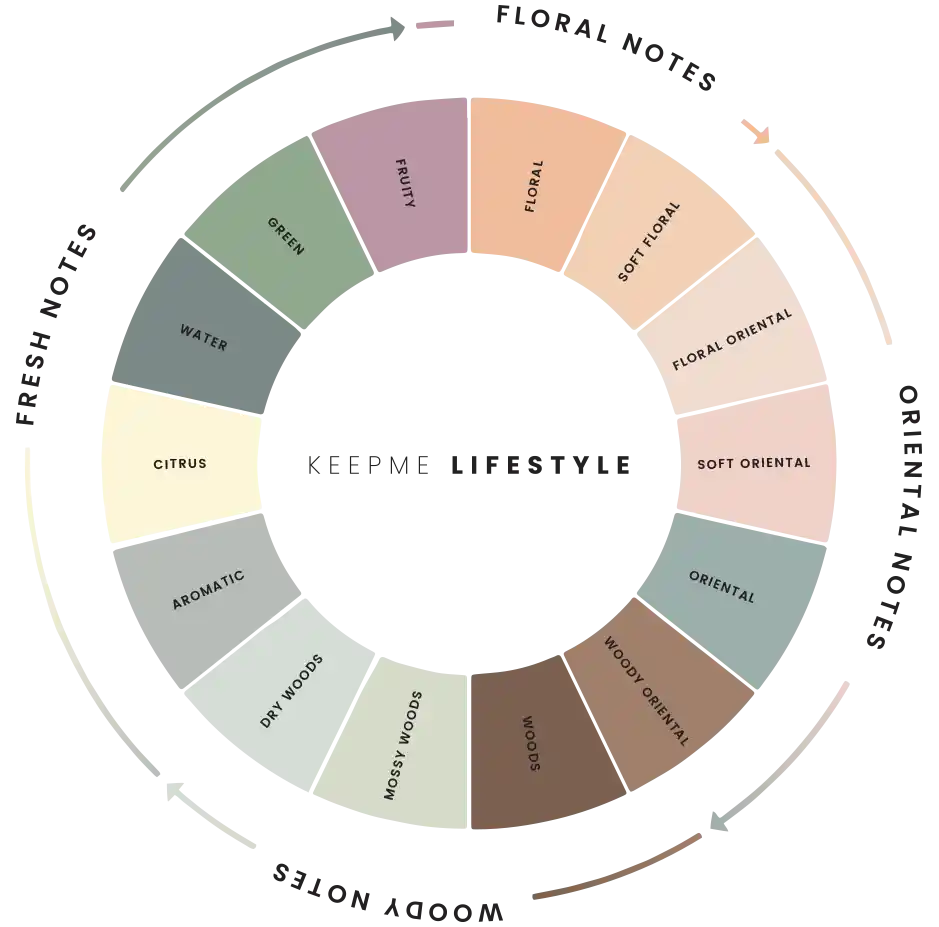
A fragrance or aroma wheel illustrates the relationships between the four main olfactory groups based on their scent similarities and differences.

The wheel is organised into segments, each representing a specific scent category, with adjacent groups sharing common traits. This helps to identify and classify scents, making it easier to understand how fragrances relate to and complement one another.

Eau de parfum or Eau de toilette
What is the real difference?

It’s all about the concentration of the perfume oil in each fragrance

What is the difference?

Eau De Toilette (EDT)

Immensely popular and less expensive than Eau de Parfum, Eau de Toilette has a concentration of between 5% - 15%, with a scent that typically lasts two to three hours. A softer, and more subtle fragrance than EDP, making it ideal to use any time of the day or night.

What is the difference?

Eau De Parfum (EDP)

With a concentration of perfume oil between 10% - 20%, Eau de Parfum is a premium, more intense fragrance, with a richer scent that can last on the skin for four to six hours, longer for bottles stored in ideal cool, dark conditions. A sophisticated scent that can reach beyond the wearer.

Get in touch

We offer expert advice on every aspect of fragrance manufacturing. Whether you’re looking to elevate an existing range or explore new manufacturing options, let us know how we can help.